Checking Out Just How Corporate Philanthropy Shapes Brand Reputation and Consumer Commitment
Company philanthropy greatly affects brand name track record and client loyalty. Companies that engage in authentic charitable efforts typically see a favorable change in how consumers view them. This placement of values fosters count on and psychological links with target markets. The efficiency of these kind initiatives can vary substantially. Recognizing what truly resonates with consumers is necessary for brand names looking for to boost their social influence and market position. What strategies will become necessary for future success?
The Advancement of Company Philanthropy
As organizations significantly identify their duty in society, the evolution of company philanthropy has actually transformed from mere charitable contributions to a critical component of brand name identification. At first, companies involved in philanthropy largely for tax benefits or to enhance their public photo. With time, this technique moved as stakeholders-- consisting of investors, consumers, and employees-- demanded a much more authentic dedication to social responsibility.
Organizations began straightening their philanthropic campaigns with their core values and service objectives, leading to even more impactful and thoughtful contributions. This modification has actually motivated firms to spend in sustainable methods and community advancement, cultivating a sense of function that resonates with customers.
Furthermore, technical developments have actually facilitated transparency and engagement, permitting services to display their philanthropic efforts more effectively. Subsequently, business philanthropy has actually arised as an indispensable component of business strategy, with organizations embracing the chance to positively influence society while boosting their total brand name story.
The Impact of Philanthropy on Brand Name Understanding
While business take part in kind initiatives to promote social good, these efforts substantially form brand name perception among customers. Company philanthropy can boost a brand name's photo by associating it with positive social influence and community involvement. Consumers commonly regard brands that proactively join philanthropic tasks as more trustworthy and liable. This perception can affect acquiring choices, as customers might favor brand names that show a dedication to social concerns.
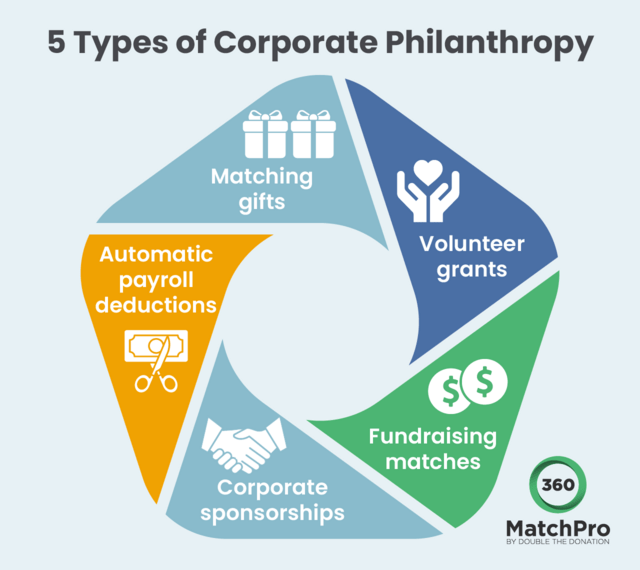
Building Emotional Connections With Granting
Company philanthropy serves as an effective device for boosting brand identity by connecting company values with neighborhood demands. With critical offering, business can promote area engagement and create shared values that resonate with consumers on an emotional level. This approach not just reinforces brand credibility however additionally builds enduring links in between companies and their stakeholders.
Enhancing Brand Identification
They not just contribute to social good but likewise build much deeper psychological links with their target markets when companies involve in philanthropic initiatives. By straightening their brand with charitable causes, firms improve their identification and signal worths that reverberate with consumers. This alignment creates a story that exceeds services and items, welcoming clients to join a common mission. As consumers progressively focus on purpose-driven brand names, firms that actively participate in providing can distinguish themselves in a congested market. Such efforts foster a feeling of commitment amongst clients who really feel directly connected to the brand name's values. Inevitably, business philanthropy comes to be an important device for enhancing brand identification, growing lasting relationships based upon shared ideas and emotional interaction.
Fostering Community Involvement
Countless research studies suggest that firms participating in community-focused humanitarian efforts can substantially strengthen emotional links with their stakeholders. By spending in neighborhood projects and supporting social causes, organizations grow a feeling of belonging and trust fund within the community. This interaction promotes a positive brand name picture, as consumers appreciate companies that demonstrate genuine issue for social problems. Staff members typically feel extra honored and inspired to be connected with a company that focuses on area well-being. As a result, consumers are more probable to develop commitment in the direction of brands that actively contribute to significant causes. Ultimately, fostering area involvement with philanthropy not only boosts brand name track record but additionally develops lasting emotional connections that benefit both the firm and the neighborhood it offers.
Creating Shared Values
Just how can companies effectively develop shared values that resonate with their stakeholders? Firms can accomplish this by straightening their humanitarian initiatives with their core objective and the passions of their neighborhoods. By taking part in efforts that resolve local demands, businesses foster emotional links with customers, enhancing brand commitment. Partnering with non-profits that reflect shared values reinforces the brand name's image and demonstrates commitment to social duty. Additionally, transparent interaction concerning these efforts allows stakeholders to see the concrete influence of their contributions. Ultimately, by integrating shared worths right into their business philanthropy, firms not just boost their credibilities however additionally grow lasting partnerships with consumers, causing enhanced commitment and depend on. This alignment is vital in modern consumer decision-making.
Situation Researches: Effective Philanthropic Campaigns
Taking a look at successful kind campaigns discloses numerous approaches that improve brand track record. Impactful community initiatives, cutting-edge collaboration versions, and long-term engagement approaches have proven efficient in cultivating site web positive connections with consumers. These situation researches highlight the relevance of thoughtful company giving in attaining both social and business objectives.
Impactful Community Initiatives
Many companies have successfully leveraged kind projects to improve their brand name online reputation while making a meaningful effect in their areas. An innovation company launched a digital literacy program in underserved neighborhoods, giving training and resources that equipped regional citizens. This campaign not only contributed to neighborhood advancement but additionally positioned the business as a socially accountable leader. A major food business implemented a cravings alleviation project, partnering with local nonprofits to distribute meals to families in demand. This effort enhanced area connections and fostered client loyalty. Through these impactful campaigns, companies have actually shown their dedication to social duty, properly aligning their brand values with the needs of the neighborhoods they serve, inevitably improving their general track record.
Innovative Partnership Designs
The success of impactful neighborhood see this efforts often depends upon ingenious partnership versions that bring together varied stakeholders to attend to complicated social difficulties. Situation studies illustrate how corporations, non-profits, and federal government entities can work together successfully. For example, a multinational firm partnered with a regional non-profit to introduce an education and learning program, merging resources and proficiency to improve area proficiency prices. One more instance entailed a tech business and a medical care company joining forces to create a telemedicine service for underserved populaces. These partnerships not only enhanced the reach of humanitarian initiatives however likewise enhanced the brand names' track records by straightening their missions with area demands. Inevitably, innovative partnership models act as a stimulant for purposeful adjustment and foster stronger connections between brand names and their customers.
Lasting Interaction Approaches
Measuring the ROI of Company Social Responsibility
As firms increasingly purchase corporate social obligation (CSR) campaigns, recognizing the roi (ROI) related to these initiatives becomes necessary. Measuring ROI in CSR is diverse, often including both qualitative and measurable metrics. Financial returns can be analyzed via increased sales, enhanced brand loyalty, and enhanced staff member morale, which can cause greater efficiency. Additionally, business may evaluate price savings linked to sustainable practices, such as lowered waste or power consumption.
Qualitatively, the influence of CSR on brand online reputation can be assessed through consumer assumption research studies and social media sites view evaluation. Studies can offer understandings into how CSR activities affect client commitment and trust fund. Moreover, benchmarking against industry criteria can help organizations assess their CSR performance. Ultimately, a thorough approach to determining ROI enables firms to make enlightened decisions concerning future CSR financial investments, straightening approaches with both economic efficiency and social impact
Consumer Expectations and Company Responsibility
Progressively, consumers expect firms to operate with a strong sense of company duty, seeing moral methods as a prerequisite for brand name loyalty. This change in assumption shows an expanding awareness of environmental and social issues, leading customers to prefer brand names that straighten with their worths. Customers are extra inclined to support firms that participate in transparent techniques, demonstrate sustainability, and add favorably to their neighborhoods.
Social media enhances these assumptions, enabling consumers to share their opinions and experiences rapidly. Brand names that fall short to fulfill these honest criteria run the risk of reaction, while those that embrace corporate duty often delight in enhanced track record and consumer commitment. As consumers demand accountability, companies need to incorporate company social responsibility right into their core strategies, prioritizing ethical actions not equally as a marketing technique, yet as a fundamental aspect of their operations. This placement can inevitably bring about stronger brand name affinity and continual success in affordable markets.
Future Trends in Business Philanthropy and Brand Name Commitment
The landscape of company philanthropy is progressing, influenced by the intense consumer expectations bordering company obligation. Companies are increasingly integrating social influence into their core organization methods, not merely as an ancillary activity. Future trends show a change toward transparency, with brands sharing thorough details concerning their kind initiatives and their straight impacts on neighborhoods.
Technology is playing an essential duty, making it possible for real-time involvement in between brands and customers. Social network systems assist in direct communication, enabling consumers to articulate their expectations and hold brand names liable. In addition, more youthful generations, specifically Millennials and Gen Z, focus on sustainability and moral techniques, driving companies to take on more conscientious techniques.
As business philanthropy comes to be identified with brand identity, firms that authentically straighten their missions with societal needs are most likely to cultivate more powerful client loyalty. This merging of values will inevitably form the future of business online reputation and customer relationships in a significantly conscientious industry.
Regularly Asked Concerns
Exactly How Do Consumers Discover a Firm's Philanthropic Efforts?
Customers uncover a company's philanthropic initiatives with various networks, including social media sites, press launches, area events, and word-of-mouth. These opportunities facilitate understanding, allowing people to engage with brand names that straighten with their values and interests.
What Duty Does Staff Member Involvement Play in Corporate Philanthropy?
Staff member involvement in corporate philanthropy boosts interaction, cultivates a sense of ownership, and strengthens team cohesion - corporate philanthropy. This participation often intensifies the impact of philanthropic initiatives, leading to better recognition and assistance for the firm's kind initiatives
Can Corporate Philanthropy Backfire on a Brand's Credibility?
If viewed as insincere or opportunistic, corporate philanthropy can certainly backfire on a brand name's credibility. Negative public perception may develop, bring about reduced trust and commitment among customers who focus on credibility in business actions.
Are Smaller Sized Business as Efficient in Philanthropy as Larger Corporations?
Smaller sized companies can be similarly efficient in philanthropy as larger firms, usually showing dexterity and credibility. Their local efforts might reverberate much more deeply with communities, promoting authentic connections despite minimal sources contrasted to their bigger counterparts.
Exactly How Can Firms Select the Right Creates to Support?
Firms can pick the best reasons by straightening their worths with area needs, examining stakeholder interests, and assessing possible influence. This strategic method promotes credibility, improves engagement, and strengthens connections with clients and the more comprehensive community.
While business engage in humanitarian initiatives to promote social good, these initiatives considerably form brand understanding amongst customers. As consumers significantly focus on purpose-driven brand names, business that actively involve in offering can separate themselves in a crowded market. Many companies have efficiently leveraged philanthropic projects to boost their brand track record while making a meaningful impact in their areas. Progressively, customers anticipate firms to run with a strong feeling of company obligation, checking out honest practices as a requirement for brand commitment. As company philanthropy comes to be synonymous with brand identity, business that authentically align their goals with social demands are most likely to foster stronger consumer loyalty.
Comments on “Why corporate philanthropy programs is redefining public systems in Houston”